


MISSION ID: ABI-NR-001
LOCATION: Northridge
OBJECTIVE CLASS: HIGH VALUE TARGET ELIMINATION
TARGET: "Fred (Frade) Lee" + 4x armed escorts
STATUS: COMPLETED (UNSTABLE EXTRACTION PROFILE)
OPERATION BRIEF
Deployment authorized into Northridge operational zone under independent PMC classification. Area designated as semi-urban mountainous combat region with high verticality, limited visibility corridors, and frequent long-range engagement lanes.
Primary objective: elimination of high-value target known as "Fred (Frade) Lee", local hostile commander operating with a 4-man armed security detail.
Intel suggested coordinated patrol behavior, fortified positioning, and aggressive response to intrusion.
INSERTION PHASE
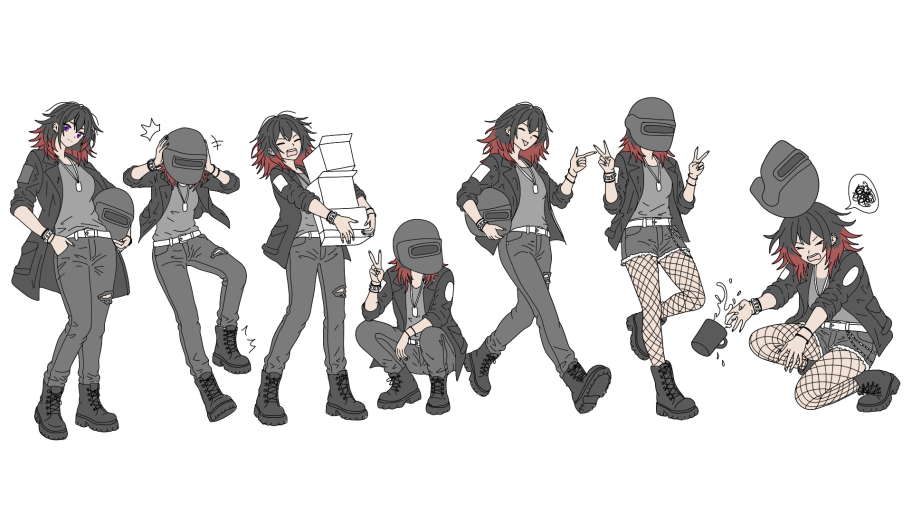
Operator "Rin" inserted without full adherence to standard pre-brief protocol confirmation.
Initial movement through Northridge terrain showed:
• inconsistent route selection
• frequent deviation into non-cover zones
• environmental misread of elevation risk zones
Despite this, subject successfully avoided early detection by utilizing terrain layering and irregular movement patterns across hillside structures.
CONTACT REPORT
First contact with escort units occurred in mid-range engagement zone near elevated residential structures.
Enemy composition:
• 4x armed guards (standard PMC-grade equipment, coordinated patrol behavior)
• HVT "Fred (Frade) Lee" positioned rear-protected
Operator response profile:
• delayed engagement initiation
• panic response spike detected in comms
• uncontrolled repositioning into partial exposure zone
Unexpected outcome:
Subject eliminated one escort unit during retreat motion using non-aimed fire pattern.
Subsequent engagement escalated into chaotic close-to-mid range exchange.
Escort unit cohesion degraded under irregular movement behavior from operator.
HIGH VALUE TARGET ENGAGEMENT
Fred (Frade) Lee attempted reposition to secondary cover point.
Operator did not follow standard clearance protocol.
Instead:
• accelerated push through open corridor
• engaged target during transition phase
HVT neutralized in suboptimal tactical window (no full flank, no coordinated suppression phase).
Analyst note:
Kill confirmed under non-standard engagement logic.
EXTRACTION PHASE
Post-HVT elimination, operator exhibited severe instability spike:
• repeated hesitation in open terrain
• loot prioritization override during active threat window
• inconsistent scanning of flanks
Recovered high-value equipment from both escort units and HVT zone before extraction.
Extraction completed under partial threat awareness.
BEHAVIORAL ANALYSIS
Subject demonstrates:
• failure in structured combat discipline
• extreme instability under direct engagement
• simultaneous presence of high-risk decision-making and effective survival outcome
Northridge engagement confirms recurring pattern:
chaos-driven survival architecture rather than trained tactical execution.
Loot acquisition behavior remains dominant secondary objective regardless of threat proximity.
FINAL COMMENT
Operator "Rin" is not functioning within expected PMC behavioral models.
Despite operational instability, mission success rate remains statistically anomalous for observed decision patterns.
Recommendation:
continued deployment under high-threat scenarios for further behavioral mapping
END OF LOG